
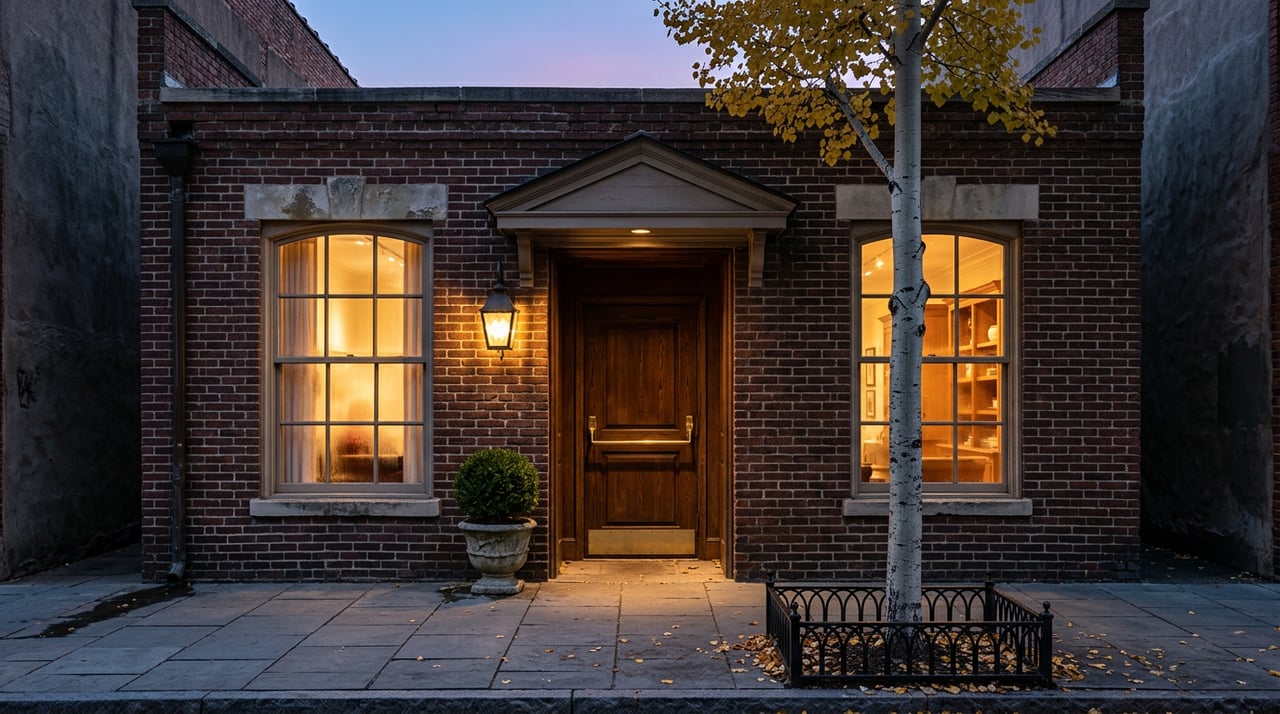
You slide onto a horseshoe banquette that seats seventy-five, order a shot and a beer for eight dollars, and rack a game of pool on a table once used at Eric's Bar before it closed in 2022, as Aspen Daily News reported. Nobody at the table mentions the table's history. In downtown Aspen, you're just expected to know.
That's the strange trick of the new Golden Horn, which opened this past June in the same basement on the corner of South Mill Street and East Cooper Avenue where the original ran from 1949 to 1996. The address hasn't changed. Almost nothing else about the building has stayed the same in three decades. And yet walking down the stairs feels less like visiting somewhere new and more like discovering that downtown has been quietly saving pieces of itself the whole time, waiting for someone to put them back together.
A Corner That Keeps Getting Renamed
The first Golden Horn was founded by Steve Knowlton, a 10th Mountain Division veteran who put a ski shop upstairs and a bar and restaurant in the basement below it. Chef Klaus Christ ran the kitchen from 1972 until the doors closed in 1996, and for most of that run the Golden Horn functioned the way a handful of Aspen institutions still do: as a place regulars measured decades against, not seasons.
When it closed, the space didn't sit empty. It became Acme Bar & Grill, then The Grottos, then Cabos, each tenancy shorter than the one before it. That pattern is common enough downtown that longtime residents navigate by memory rather than street signs. Ask someone for directions to a shop on the mall and there's a decent chance they'll answer with what used to occupy the storefront rather than what's there now. Downtown Aspen has never been good at letting go of its own history, even when it keeps tearing down the buildings that housed it.
What makes the new Golden Horn worth your attention isn't that owners John Bukac and Sam Hayes revived a beloved name after five years of planning. It's what they did with that time. Instead of designing around the ghost of the old Golden Horn, they went out and collected the actual wreckage of everything downtown had lost since.
The Manifest
Walk the room and you're standing inside a small inventory of Aspen's closed businesses:
- The pool tables came from Eric's Bar, shuttered in 2022, re-felted and left free to play
- The ceiling beams were pulled from the old Mi Chola
- The bar rail was salvaged from the Compromise Mine
- The window shutters once hung at the now-closed Mountain Chalet
- Portions of the walls expose the original rubble from when the building went up in 1956
- Near the entrance, roughly twenty portraits make up what Bukac and Hayes call the Aspen Wall of Fame, including Hunter S. Thompson and Bonnie Rayburn, who ran her own well-known restaurant on Aspen Mountain for seventeen years
Tim Sack, executive director of the nonprofit Buckhorn Public Arts, designed the space with all of this history in mind rather than treating it as decor to be arranged around a menu. That distinction matters. A restaurant that hangs a few old photos on the wall is doing nostalgia. A restaurant built from the literal load-bearing parts of a dozen other places that used to matter here is doing something closer to preservation, just without the paperwork.
Bukac and Hayes aren't strangers to this. Both spent years working at Meat and Cheese and Matsuhisa before taking this on, and Bukac already runs Jimoto Aspen, the ramen spot a few blocks over. When he describes what he wanted the Golden Horn to be, he's specific about who it's for.
As Aspen Daily News reported, Bukac said: "It's approachable food and drink for the workhorses in town. We'd like to see anything from kids' birthday parties to work meetings or grabbing a quick bite on your lunch. A place where people can come three times a week and not feel stagnant with the menu or the vibe that's in here."
That's a different customer than most of what has opened in Aspen over the past few winters, and downtown residents will recognize the gap he's describing. The room is open eleven in the morning to two at night, seven days a week, with a patio that seats about thirty and a Full Swing golf simulator that also runs basketball and soccer games. None of it requires a reservation six weeks out. None of it requires a tasting menu.
What's Actually New Around It
The Golden Horn isn't reopening into a quiet corner. The blocks around Cooper Avenue and Main Street keep turning over. Sant Ambroeus now runs a full-service restaurant in the former Main Street Bakery space at 201 East Main, serving Milanese-style plates built around Rocky Mountain produce. Up the mall, Explore Booksellers built a second-floor coffee shop into the space that used to hold Pyramid Bistro, giving the store's regulars a reason to linger past the shelves. Down at MOLLIE Aspen, Petit Trois added lunch and expanded its patio this summer instead of scaling back for the season, and Petit Familia opened as its rooftop agave bar.
None of these are the restaurants that get written up nationally every January. That's arguably the point. They're the places someone who actually lives in the core can walk into on a Tuesday without planning around it, and taken together they say something about what downtown's current stretch of openings is actually solving for: not spectacle, but the ordinary rhythm of a neighborhood where people eat, drink coffee, and buy books within four or five blocks of home.
The Rest of the Week
If you live in the core, you already have a rhythm built around the pedestrian mall, the Wagner Park loop, and whichever coffee counter is closest to your door. The last Thursday of most months adds another layer to that rhythm, when several of downtown's galleries stay open into the evening for what locals call the Aspen Art Walk. It's not a ticketed event and it isn't aimed at visitors. It's closer to a standing excuse to see what the galleries on your own walking route have hung recently, then end the night a few blocks away with a drink that didn't require a reservation.
Pair that with the Golden Horn and you get something downtown hasn't had in a while: a low-key anchor for the kind of evening that doesn't need an occasion. Grab a game of pool on Eric's old table, walk two blocks to see what's new on the gallery walls, come back for a second round. The corner of Mill and Cooper has hosted this exact rhythm before, back when the original Golden Horn was the place John Wayne and Miles Davis both happened to walk through the same door. It just took thirty years, three successive tenants, and a very patient pair of owners to get the room back to doing what it was built to do.
That's the part worth sitting with if you've lived downtown long enough to remember what used to be at that address. Aspen's core doesn't actually erase its own history when a business closes. It stores the pieces until someone with enough patience and the right eye puts them back into circulation. The Golden Horn isn't a revival. It's proof the materials were never thrown away.
If you're curious how these small shifts in the neighborhood, a new bar, a gallery walk, a bookstore's second floor, tend to shape what people love about living downtown, Joshua Landis writes about this stretch of Aspen because he's spent thirty years walking it. Let's Connect if you'd ever like to talk about what's changing on your block.