
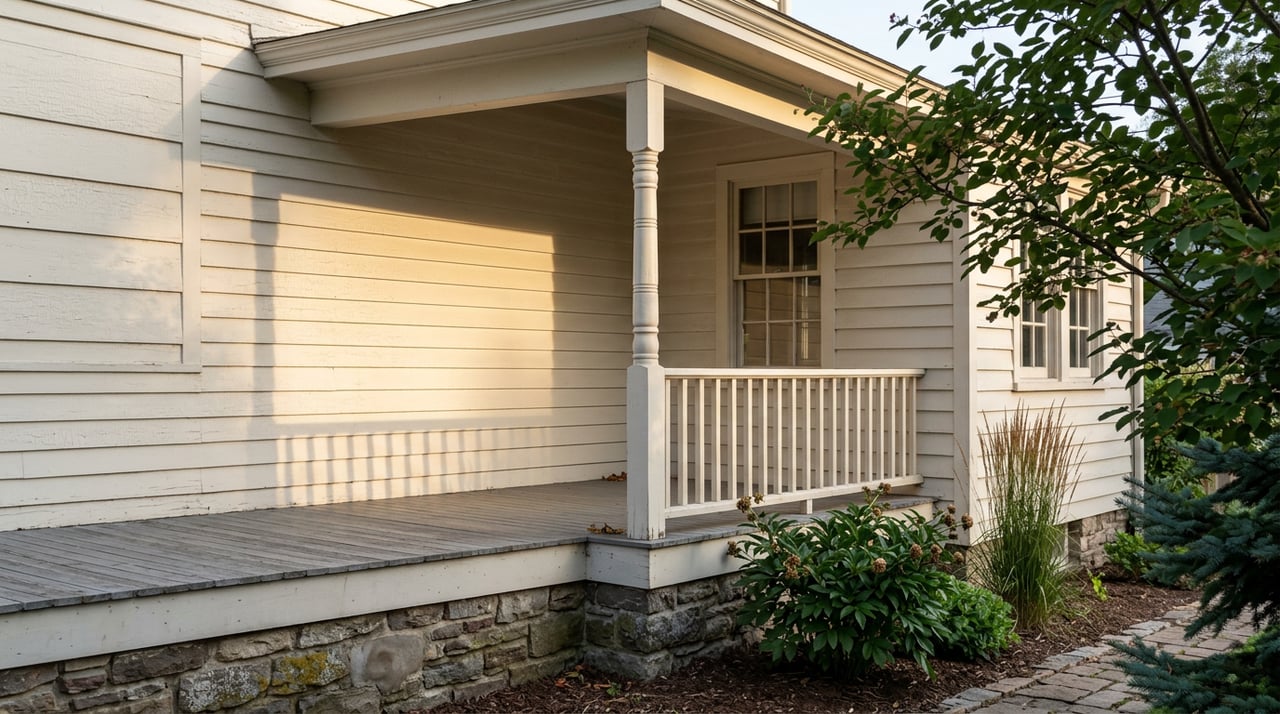
For a West End purchase, confirm the property's historic-designation status and allow time for approvals before planning exterior work.
The guidelines had been largely stable since 2016, but on April 14, 2026, the Aspen City Council and Historic Preservation Commission agreed that they needed rewriting, as the Aspen Times reported. If you're buying or selling a designated property in the West End right now, new language is still being drafted. The final guidelines could affect future renovation plans, but their effect is not yet known.
The Guidelines' History and Proposed Rewrite
Aspen's Historic Preservation Design Guidelines were written in 1986, updated in 2000, updated again in 2016, and touched once more in 2024 for what amounted to a single sentence change. For most of the past decade, if you owned or wanted to buy a landmarked West End property, you were operating under a document that predated smartphones' current form factor.
The guidelines are now under review. The Aspen Times reported that Historic Preservation Officer and Principal Planner Gillian White told council the guidelines cover, in her words, "pretty much everything you can think of" from site planning to door hardware to roof materials, across 12 chapters and 116 individual guidelines. Council backed the rewrite. The Historic Preservation Commission is now finalizing draft language, which will go through public review before a final vote, though no adoption date has been set.
Any future changes will depend on what the commission finalizes and council adopts.
Three Issues in the Rewrite
The Aspen Times quoted Community Development Director Ben Anderson saying at that same work session, "There are big tradeoff conversations that I think the community has to have." Three of those conversations may affect West End properties.
| What's being negotiated | Where it bites in West End | Why it matters to a buyer |
|---|---|---|
| Energy code compliance on designated buildings | Any West End Victorian or panabode with historic windows, siding, or roofing | Current guidelines predate today's energy code. A rewrite could mandate upgrades that weren't required when the current owner last renovated. |
| Wildfire resiliency materials | Wood-clad cottages and chalets throughout the neighborhood | New material standards aimed at fire prevention could conflict with existing guidelines. |
| Mass and scale for affordable housing additions | Victorian miner's cottages specifically | The Aspen Times reported Anderson saying the city has "long incentivized additional density" on these cottages; disagreements over appropriate scale have already stalled projects. |
None of these issues has a settled outcome. HPC Commission Member Barb Pitchford also raised the affordable housing and wildfire tensions at the same meeting. A buyer closing on a designated West End property this fall is doing so while a rewrite is being drafted.
Designation Cuts Both Ways
Here's what most West End guides leave out entirely: designation isn't only a constraint on a seller. It can be a negotiating chip.
According to the Aspen Times, Aspen Modern is a voluntary program that lets an owner formally designate a property as a historic landmark in exchange for concessions from the city, including variances. It's a trade. The owner locks in preservation. The city gets to keep a building it wants saved. The owner gets development flexibility they wouldn't otherwise have.
There's also a release valve built into the system: the City of Aspen explains that a Transferable Development Right lets a designated property sever undeveloped floor area for use on a different parcel within the city. For a West End lot with a small historic footprint and limited room to expand, that's a mechanism worth understanding before you assume designation only subtracts value.
This isn't fringe practice. Rowland+Broughton, the Main Street firm whose principals live in the West End, does historic renovation for 60 percent of its business. Sarah Broughton spent eight years sitting on the Historic Preservation Commission herself before returning to private practice. When a firm that deep in the system builds most of its book around historic work, it tells you the negotiation between preservation and flexibility isn't an edge case. It's how West End real estate gets built.
What This Looks Like on the Ground
Walk West Francis Street and you'll pass the Bowles-Cooley House and the Davis Waite House, both on the city's historic inventory. A few blocks over sits the Wheeler/Stallard Museum, an 1888 Queen Anne Victorian that anchors the neighborhood's oldest architectural layer. Scattered among them are panabodes, the prefabricated log kit homes that went up during Aspen's mid-century ski boom, several designed with input from Herbert Bayer, Fritz Benedict, Ted Mullarz, and Ellie Brickham.
Buy any one of these and you're not just buying a house. A panabode owner today who wants to swap in fire-resistant siding is asking a question the current guidelines weren't written to answer. The rewrite is trying to answer it. Nobody knows yet what the answer will be.
Before You Write an Offer
If you're looking at a designated property in the West End right now, a few things are worth confirming before you're deep into a contract:
- Check the property against the city's Inventory of Historic Sites and Structures directly rather than relying on a listing description.
- Ask whether any exterior work, and some interior work, will need Historic Preservation staff review before you can start.
- Build schedule slack into any renovation plan. HPC agendas are typically full for months in advance, and that was true before a guideline rewrite added a new layer of uncertainty to what gets approved.
- If you're the seller of an eligible but undesignated property, ask whether an Aspen Modern designation could be negotiated into your sale terms, since the variance concessions attached to that program can change a deal's economics.
- If floor area is tight on a designated lot, ask about Transferable Development Rights before assuming your only option is building smaller.
FAQ
Does historic designation lower resale value in the West End? The research doesn't support a blanket answer either way. Designation can also unlock variances and TDR flexibility that undesignated neighbors don't have access to. The effect depends on the specific property and what the owner wants to do with it.
How long will the guideline rewrite take to finalize? As of this writing, the Historic Preservation Commission is still drafting language, with public review and a formal City Council vote still ahead. No adoption date has been announced.
If you're weighing a West End purchase where designation status is part of the picture, that's exactly the kind of detail worth working through before you write an offer, not after. Joshua Landis has spent more than three decades in Aspen watching how these preservation rules actually play out on the ground, and can walk you through what a specific property's status means for your plans. Let's Connect.
This article is general information, not legal, tax or financial advice. Consult a qualified professional about your situation.